 Fireblaze
 Career Roadmaps
Various Roles and Designations in the World of Data Science: Complete Career Guide (EP-08)
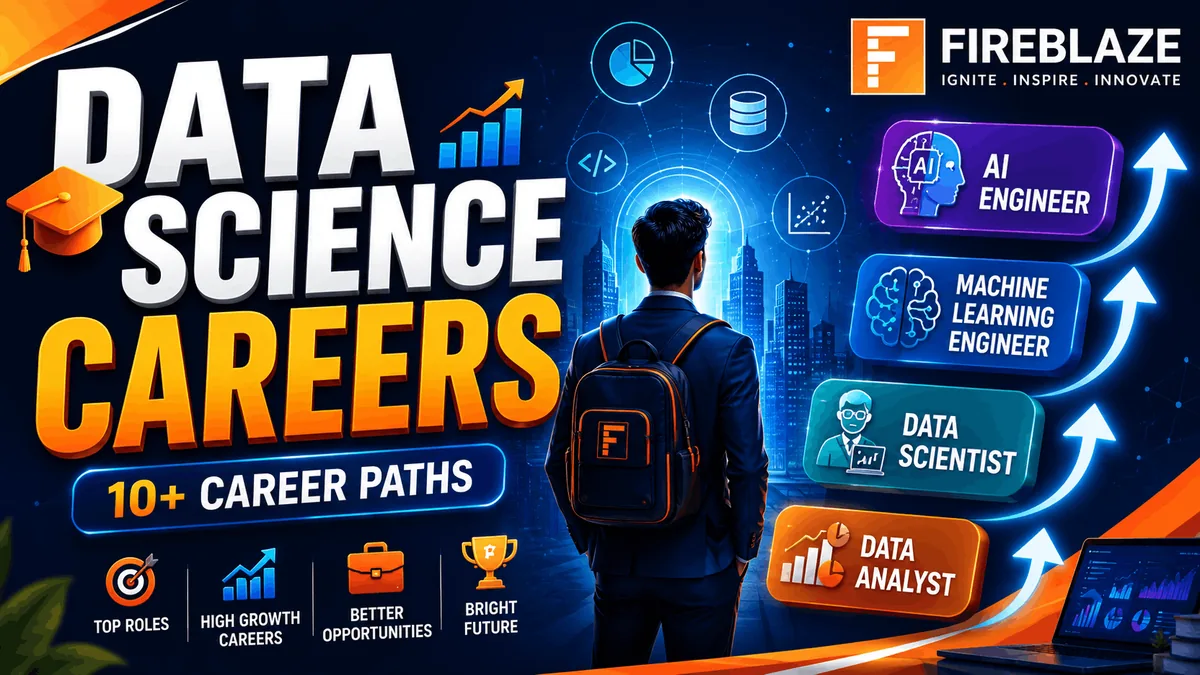
Data Science has become one of the fastest-growing career domains worldwide. As organizations increasingly rely on data-driven decision-making, the demand for skilled professionals continues to rise across industries.
However, many beginners are often confused by the different job titles in the Data Science ecosystem. Terms like Data Analyst, Data Scientist, Machine Learning Engineer, Data Engineer, AI Engineer, and Business Analyst are frequently used, but each role has unique responsibilities and skill requirements.
In this guide, we'll explore the major roles and designations in the world of Data Science and help you understand which career path may be best suited for your interests and goals.
Why Are There So Many Data Science Roles?
Modern organizations generate enormous volumes of data from:
Websites
Mobile Applications
Social Media
Banking Systems
Healthcare Platforms
E-Commerce Applications
Managing, analyzing, and extracting value from this data requires specialized professionals with different skill sets.
As a result, several roles have emerged within the Data Science ecosystem.
1. Data Analyst
A Data Analyst is responsible for collecting, cleaning, analyzing, and visualizing data to support business decisions.
Key Responsibilities
Data Cleaning
Data Analysis
Dashboard Creation
KPI Tracking
Business Reporting
Common Tools
Excel
SQL
Power BI
Tableau
Python
Skills Required
SQL
Data Visualization
Statistics
Business Understanding
Career Entry Level
This is one of the most popular entry-level roles in Data Science.
2. Business Analyst
Business Analysts focus on bridging the gap between business teams and technical teams.
Responsibilities
Requirement Gathering
Process Analysis
Stakeholder Communication
Business Strategy Support
Skills Required
Communication
Data Analysis
Documentation
Problem Solving
Common Tools
Excel
Power BI
SQL
Jira
Business Analysts focus more on business processes than advanced machine learning.
3. Data Scientist
A Data Scientist uses advanced analytics and machine learning techniques to solve complex business problems.
Responsibilities
Predictive Modeling
Machine Learning
Statistical Analysis
Feature Engineering
Data Exploration
Skills Required
Python
SQL
Statistics
Machine Learning
Deep Learning
Common Libraries
Pandas
NumPy
Scikit-Learn
TensorFlow
PyTorch
Data Scientists are often considered the core problem-solvers in data-driven organizations.
4. Machine Learning Engineer
Machine Learning Engineers focus on deploying and scaling machine learning models.
Responsibilities
Model Deployment
Model Optimization
Production Systems
ML Infrastructure
Skills Required
Python
Machine Learning
MLOps
Cloud Computing
APIs
Common Tools
TensorFlow
PyTorch
Docker
Kubernetes
This role combines software engineering with machine learning expertise.
5. Data Engineer
Data Engineers build and maintain the infrastructure required for storing and processing data.
Responsibilities
Data Pipelines
ETL Processes
Database Management
Data Warehousing
Skills Required
SQL
Python
Spark
Hadoop
Cloud Platforms
Common Tools
Apache Spark
Apache Kafka
Snowflake
AWS
Without Data Engineers, Data Scientists would not have clean and accessible data to work with.
6. AI Engineer
AI Engineers design and develop Artificial Intelligence solutions.
Responsibilities
AI Model Development
Deep Learning Systems
NLP Applications
Computer Vision Projects
Skills Required
Deep Learning
Neural Networks
Python
NLP
Computer Vision
Common Frameworks
TensorFlow
PyTorch
Keras
AI Engineers work extensively on cutting-edge AI applications.
7. Business Intelligence (BI) Developer
BI Developers focus on creating reporting systems and dashboards for decision-makers.
Responsibilities
Dashboard Development
KPI Monitoring
Report Automation
Data Visualization
Common Tools
Power BI
Tableau
SQL Server
Excel
This role is ideal for individuals interested in reporting and visualization.
8. Data Architect
Data Architects design the overall data infrastructure of an organization.
Responsibilities
Database Design
Data Governance
Architecture Planning
Security Frameworks
Skills Required
Databases
Cloud Computing
Data Modeling
System Design
This is typically a senior-level role.
9. Statistician
Statisticians focus on extracting insights using statistical methods.
Responsibilities
Data Analysis
Experimental Design
Hypothesis Testing
Predictive Modeling
Skills Required
Statistics
Probability
R Programming
Research Methods
Statisticians play a critical role in research-intensive industries.
10. Analytics Consultant
Analytics Consultants help organizations solve business challenges through data.
Responsibilities
Client Engagement
Data Analysis
Business Recommendations
Strategy Development
Skills Required
Communication
Analytics
Presentation Skills
Business Understanding
Consulting firms frequently hire Analytics Consultants.
Emerging Roles in Data Science
As technology evolves, new career paths continue to emerge.
Generative AI Engineer
Builds applications using Large Language Models (LLMs) and Generative AI.
Prompt Engineer
Designs effective prompts for AI systems.
MLOps Engineer
Manages machine learning deployment and monitoring infrastructure.
AI Product Manager
Leads AI-driven product development initiatives.
Data Governance Specialist
Ensures data quality, compliance, and security.
Data Science Career Roadmap
For beginners, the recommended progression often looks like:
Data Analyst

↓

Business Analyst

↓

Data Scientist

↓

Senior Data Scientist

↓

Lead Data Scientist

↓

Analytics Manager
Alternative paths include:
Data Analyst

↓

Data Engineer

↓

Senior Data Engineer

↓

Data Architect
Or:
Data Scientist

↓

Machine Learning Engineer

↓

AI Engineer

↓

AI Architect
Average Salary Expectations in India
| Role | Approximate Salary |
|---|---|
| Data Analyst | ₹4–10 LPA |
| Business Analyst | ₹5–12 LPA |
| Data Scientist | ₹8–25 LPA |
| Machine Learning Engineer | ₹10–30 LPA |
| Data Engineer | ₹8–28 LPA |
| AI Engineer | ₹12–35 LPA |
| Analytics Consultant | ₹8–25 LPA |
Actual salaries vary based on experience, location, and company.
Which Role Should You Choose?
Choose Data Analyst If You Like:
Dashboards
Reporting
SQL
Visualization
Choose Data Scientist If You Like:
Machine Learning
Statistics
Problem Solving
Choose Data Engineer If You Like:
Databases
Data Pipelines
System Design
Choose AI Engineer If You Like:
Deep Learning
NLP
Computer Vision
Generative AI
Skills Required Across All Data Roles
Regardless of designation, these skills remain valuable:
SQL
Python
Statistics
Data Visualization
Communication
Problem Solving
These fundamentals form the foundation of successful data careers.
Why Data Science Careers Are Growing in 2026
Organizations across industries are investing heavily in:
Artificial Intelligence
Machine Learning
Business Intelligence
Automation
Predictive Analytics
This has created enormous demand for skilled data professionals worldwide.
Professionals who continuously learn and adapt will have significant opportunities for career growth.
Final Thoughts
The Data Science ecosystem offers a wide variety of exciting career paths, ranging from Data Analytics and Business Intelligence to Machine Learning and Artificial Intelligence. Understanding the responsibilities and skill requirements of each role can help you make informed career decisions.
Whether you choose to become a Data Analyst, Data Scientist, Data Engineer, or AI Engineer, building strong fundamentals in SQL, Python, Statistics, and Analytics will set the foundation for long-term success in the data industry.
Keep Reading
Related Articles
Career Roadmaps
Essential Skills for Data Scientists: A Complete Career Guide for 2026
Learn the most important technical and soft skills required to become a successful Data Scientist. Explore career-ready skills, tools, and technologie
How to Become an AI Engineer in India: Complete Roadmap (2026) AI Engineer Roadmap
Artificial Intelligence is transforming industries and creating thousands of career opportunities across India. Becoming an AI Engineer in 2026 requir
Why Companies Prefer Full Stack Developers Over Specialized Roles Today
A Full Stack Developer is a professional capable of working across the entire technology stack: from the front-end user interface to the back-end serv