 Fireblaze
 Applied AI Forward Deployment Engineering Program • 26 Weeks • Weekend • Online or Nagpur Classroom
Forward Deployed Engineer Course: Build AI That Ships
Learn the engineering, AI application development, deployment and customer-facing skills needed to build and implement AI systems in real environments. For people who already code and want to move from notebooks to production.
Curriculum last updated: 21 September 2026
Applied AI Forward Deployment Engineering Program is Fireblaze AI School's 26-week Forward Deployed Engineer course. It teaches you to build, deploy and operate AI systems inside real environments: production Python and SQL, data and API integration, LLM application engineering with RAG and agents, deployment with Docker and CI/CD, and the customer-facing craft of scoping and demoing to stakeholders. It runs on weekends, as live online classes available across India or classroom sessions in Nagpur. The fee is ₹95,000 for the online cohort and ₹1,25,000 for the Nagpur classroom cohort, both inclusive of 18% GST. You need working knowledge of at least one programming language to join.
At a Glance
| Program | Applied AI Forward Deployment Engineering Program |
|---|---|
| Also known as | Forward Deployed Engineer (FDE) course |
| Target roles | Forward Deployed Engineer and adjacent AI delivery roles |
| Duration | 26 weeks |
| Format | Live online across India, or classroom in Nagpur |
| Who it is for | Working IT professionals with 1 to 8 years of experience |
| Mentors | Industry practitioners with 10+ years of experience |
| Schedule | Weekend, built for working professionals |
| Fee | ₹95,000 online, ₹1,25,000 Nagpur classroom, both inclusive of 18% GST |
| Prerequisite | Working knowledge of at least one programming language |
| Capstone | 4-week team deployment project with an industry-panel review |

What is a Forward Deployed Engineer?
Short answer: A Forward Deployed Engineer (FDE) is a technical professional who works closely with customers or business teams to understand a real operational problem, then designs, builds, deploys and adapts a software or AI system to solve it inside that customer's environment.
The distinction that matters is where the work happens. A product engineer builds one capability for many customers, from their own codebase. An FDE takes the technology to one customer and makes it work there, against that customer's data, systems, permissions and constraints, then feeds what they learned back into the product.
The role spans six things at once: engineering, AI implementation, customer discovery, integration, deployment and iteration. That breadth is the job, and it is why the role is hard to fill. Most candidates have the engineering or the AI or the customer skills, rarely all three.
Responsibilities vary between companies, and that variation is real rather than a hedge. If you want the wider career picture, including how the title compares with adjacent roles and what the salary situation actually is, read our detailed guide to the Forward Deployed Engineer career.
What does a Forward Deployed Engineer actually do?
The work follows a repeating loop. This program is structured around it.
1. Understand the problem
Talk to the people who will use the system. Separate what they asked for from what they actually need, which are usually different.
2. Inspect the environment
Map the existing systems, APIs, databases, data quality and workflows you have to work within. This is where most projects are won or lost.
3. Design the solution
Choose an architecture that fits the constraints, and decide what not to build. Knowing when retrieval beats fine-tuning, or when a SQL query beats a model, saves months.
4. Build
Write production code: the application, the integrations, the AI layer, the evaluation harness that proves it works.
5. Deploy
Move it into the real environment, with authentication, secrets, monitoring and the security constraints the organisation actually has.
6. Iterate and hand over
Measure it against real usage, debug what breaks, then document and hand over so it survives without you.
The Difference
Why FDE skills are different from a typical AI course
Most AI training stops where this program starts. The gap between a working notebook and a system a business depends on is the entire job.
| Typical AI learning | FDE-oriented engineering |
|---|---|
| A notebook | A production system |
| A clean teaching dataset | Messy business data from three systems that disagree |
| A model | A complete solution, of which the model is one part |
| A prompt that demos well | An evaluated AI application with a measured pass rate |
| A course project | A deployable system with CI/CD and monitoring |
| A requirements document | Stakeholder discovery, because the document is wrong |
| A slide presentation | A live technical demo where people interrupt with questions |
| A certificate | A portfolio and evidence you can defend in an interview |
Who this course is for
This program is built for working professionals with 1 to 8 years of experience in IT, typically engineers holding degrees in Computer Science, IT, AI, Data Science or an aligned branch. You should already be comfortable writing code; the program moves fast from week one.
Engineers and developers
Software engineers, backend developers and QA engineers who can already code and want to add applied AI and deployment.
Data professionals
Data analysts, data engineers and BI developers with SQL and Python who want to move from reporting into building systems.
Engineers changing track
CS, IT, AI and Data Science graduates a few years into an IT role who want to move into applied AI and deployment work.
Prerequisites
We keep the bar honest, because the program moves fast from week one.
- Required: working knowledge of at least one programming language
- Preferred: Python, basic SQL, and some familiarity with Git
- Preferred: a general understanding of how software gets built and shipped
- You do not need prior machine learning or Generative AI experience. Phase 2 builds that from fundamentals.
Who this is not for
We would rather tell you now than take your fee.
- Absolute beginners with no programming background. Start with our Python course first.
- Anyone looking mainly for a certificate rather than a portfolio.
- Non-technical candidates who do not intend to write code.
- Anyone wanting a purely theoretical AI course. Most of your time here is spent building and debugging.
The Path
The Forward Deployed Engineer roadmap
Each stage assumes the one before it. The program runs this sequence in 26 weeks.
Programming and software engineering
Production Python, Git and pull-request workflow, testing, and reading a codebase you did not write.
Data, APIs and systems integration
Advanced SQL, messy real data, REST and GraphQL, orchestration, and the enterprise formats nobody teaches.
AI application engineering
LLM fundamentals, RAG, agents and tool use, and the evaluation discipline that separates a demo from a system.
Deployment, cloud and observability
Docker, CI/CD, secrets, monitoring, security and the compliance vocabulary enterprise buyers expect.
Customer discovery and solution design
Stakeholder discovery, scoping, estimation, technical demos, handover and executive communication.
Real deployment experience
A team capstone taken from discovery through two sprints to a deployed system and a panel defence.
Complete Curriculum
The six phases, week by week
Published in full, with the deliverable for each phase. Nothing hidden behind a download form.
Phase 0 • Engineering Foundations (2 weeks)
- Git and pull-request workflow, and working in unfamiliar codebases
- Production Python: typing, logging, packaging
- Testing with pytest, including mocking
- Advanced SQL: window functions, CTEs, query plans, schema design
Deliverable: a tested Python CLI that ingests CSV into PostgreSQL, submitted as a reviewed pull request.
Phase 1 • Data and Systems Integration (3 weeks)
- Messy real-world data, Pandas and Polars, data profiling
- REST and GraphQL, pagination, retries, idempotency
- FastAPI, and orchestration with Airflow or Prefect
- Backfills and failure recovery
- The enterprise reality: SFTP, SOAP, Salesforce and SAP exports
- OAuth 2.0 and service accounts
Deliverable: a scheduled pipeline running across three heterogeneous sources.
Phase 2 • AI Application Engineering (8 weeks, the core)
- LLM fundamentals: context, cost, latency, structured output, streaming
- Prompt engineering, prompt injection and a working failure taxonomy
- RAG: chunking, embeddings, pgvector, Qdrant, hybrid search, reranking, grounding and citations
- Agents: tool use, MCP, human-in-the-loop design
- Evaluation: golden datasets, LLM-as-judge, regression testing
- Tracing and observability with Langfuse and LangSmith
- Guardrails, PII redaction, fallback chains and cost control
- Choosing between fine-tuning, RAG and plain SQL, LoRA basics, and build versus buy
Deliverable: a RAG and agent application with an evaluation suite, a tracing dashboard, and an architecture defence.
Phase 3 • Ship and Operate (4 weeks)
- Docker and cloud deployment, secrets management
- GitHub Actions, CI/CD, staged deployments and rollback
- Terraform fundamentals
- Observability: logging, metrics, tracing, alerting
- Security: RBAC, tenant isolation, encryption, audit logs, client VPC concepts
- The compliance vocabulary buyers use: DPDP Act, GDPR, SOC 2
Deliverable: a production deployment with CI/CD, authentication, monitoring and a security review.
Phase 4 • Forward Deployed Craft (3 weeks)
- Stakeholder discovery, workflow mapping and problem discovery
- Pilot scoping and solution design
- Statements of work, estimation and scope management
- Technical demos and executive communication
- Status reporting, handover, runbooks and enablement
- Taking a pilot through to production
How it is taught: role-play sessions with mock customers, because this is a skill you cannot learn from slides.
Phase 5 • Live Deployment Capstone (4 weeks)
Teams of three run a full engagement end to end:
- Problem discovery and a written problem statement
- Architecture, then an architecture review
- Two development sprints
- A client-style demo, followed by scope correction
- Production deployment and handover documentation
- A final presentation to an industry panel
Deliverable: a deployed system plus the documentation and defence that go with it.
Learning Model
The weekend ritual: you present, every week
Every weekend, each student presents their work to a rotating mock stakeholder and answers both technical and business questions about it.
The reason is straightforward. The hardest part of forward deployed work is not writing the code, it is explaining a trade-off to someone who does not share your assumptions, under questioning, without either oversimplifying or hiding behind jargon. That is a performance skill, and performance skills only improve with repetition and feedback.
By the time you reach the capstone panel, presenting your architecture to people who will challenge it is familiar rather than frightening. That is the entire point of doing it weekly instead of once at the end.
What a typical weekend looks like
- Concept session on the week's topic
- Supervised lab time on your own build
- Present last week's work to a mock stakeholder
- Take questions, then take the feedback into next week
Tools
Your stack, and why each piece is in it
Sixteen tools, each one earning its place by showing up in real deployment work. No logo wall for the sake of it.
Python
The working language of AI tooling, data work and backend integration. Taught as production code, not notebook snippets.
FastAPI
How you expose your system to the rest of the customer's stack as a real service.
PostgreSQL + pgvector
The database most enterprises already run, with vector search in the same place, so you add no new infrastructure.
Qdrant
A dedicated vector database, for when retrieval scale or filtering outgrows pgvector.
Docker
The unit of deployment. If it runs on your laptop only, it is not deployed.
GitHub
Version control and code review, the way a delivery team actually works.
GitHub Actions
The CI/CD pipeline that ships your changes safely, with a way back if they break.
Terraform
Infrastructure as code, so an environment can be rebuilt and reviewed rather than hand-configured.
Airflow / Prefect
Scheduling and orchestrating pipelines, including backfills and recovery when a run fails.
LangGraph
Structuring agent workflows with explicit state, instead of a prompt chain nobody can debug.
Langfuse / LangSmith
Tracing and evaluation for LLM applications, so you can answer why the system did what it did.
Claude API
One of the two model APIs you build against, compared on the same tasks rather than taught in isolation.
OpenAI API
The other. Knowing where each is stronger is part of the job, not brand loyalty.
MCP
The Model Context Protocol for connecting models to tools and data. It now appears by name in FDE job descriptions.
AWS / GCP
Cloud fundamentals for deploying, securing and monitoring what you build.
Evaluation harness
Golden datasets, LLM-as-judge and regression tests. The discipline that separates a demo from a system.
Projects
What you will build
Every phase ends in something that runs. You finish with a portfolio you can demonstrate, not a list of topics covered.
Tested Python ingestion CLI
A command-line tool moving CSV data into PostgreSQL, with tests, submitted and reviewed as a pull request.
Multi-source integration pipeline
A scheduled pipeline pulling from three systems that do not agree with each other, with retries and failure recovery.
RAG application with evaluation
Retrieval over real documents, with chunking, reranking, grounding, citations and a measured accuracy suite.
AI agent with tool use
An agent that calls real tools, with human-in-the-loop checkpoints and full tracing of what it did and why.
Production deployment
Containerised, deployed through CI/CD, with authentication, secrets, monitoring and a security review.
Live deployment capstone
A four-week team engagement from discovery to handover, presented to an industry panel.
Role Comparison
Forward Deployed Engineer compared with adjacent roles
None of these is a better career than the others. They suit different people, and the boundaries differ by company.
| Role | Primary focus | Customer contact | Owns deployment | AI depth |
|---|---|---|---|---|
| Forward Deployed Engineer | One customer, many capabilities | Constant and direct | Yes | Applied |
| Software Engineer | One capability, many customers | Usually none | Shared with platform teams | Optional |
| AI Engineer | Building AI features and applications | Occasional | Often | Deep on applications |
| ML Engineer | Models and ML systems in production | Occasional | Yes, for models | Deep on modelling |
| Solutions Engineer | Designing and demonstrating the fit | Constant, pre-sales weighted | Rarely | Conceptual |
| Data Scientist | Analysis, experiments and insight | Internal stakeholders | Rarely | Deep on statistics |
| AI Implementation Engineer | Delivering AI into a customer setting | Frequent | Yes | Applied |
The two distinctions people get wrong most often: a solutions engineer rarely writes code on customer infrastructure, and a consultant delivers a recommendation rather than a running system. An FDE does both, and stays after the deal closes.
Two ways to attend
Same curriculum, same instructors, same capstone. Pick whichever fits your city and your schedule.
Online Forward Deployed Engineer course
Live, instructor-led weekend classes you join from anywhere in India. These are real classes on a fixed schedule with live doubt-solving and the same weekly stakeholder presentation, not a library of recordings you watch alone. Your project work, code reviews and mentor interaction all run through the same pipeline as the classroom cohort, and your capstone team can be distributed.
Best if you are a working professional outside Nagpur, or your weekends are unpredictable enough that you need to join from home.
Forward Deployed Engineer course in Nagpur
Classroom weekends at Fireblaze AI School in Nagpur, where we have taught data and AI since 2017 across three centres: Mate Square, Nandanvan and Sadar. In-person sessions give you supervised lab time, whiteboard architecture reviews, and mock-stakeholder role-play done face to face, which is noticeably harder and therefore more useful practice than doing it over a call.
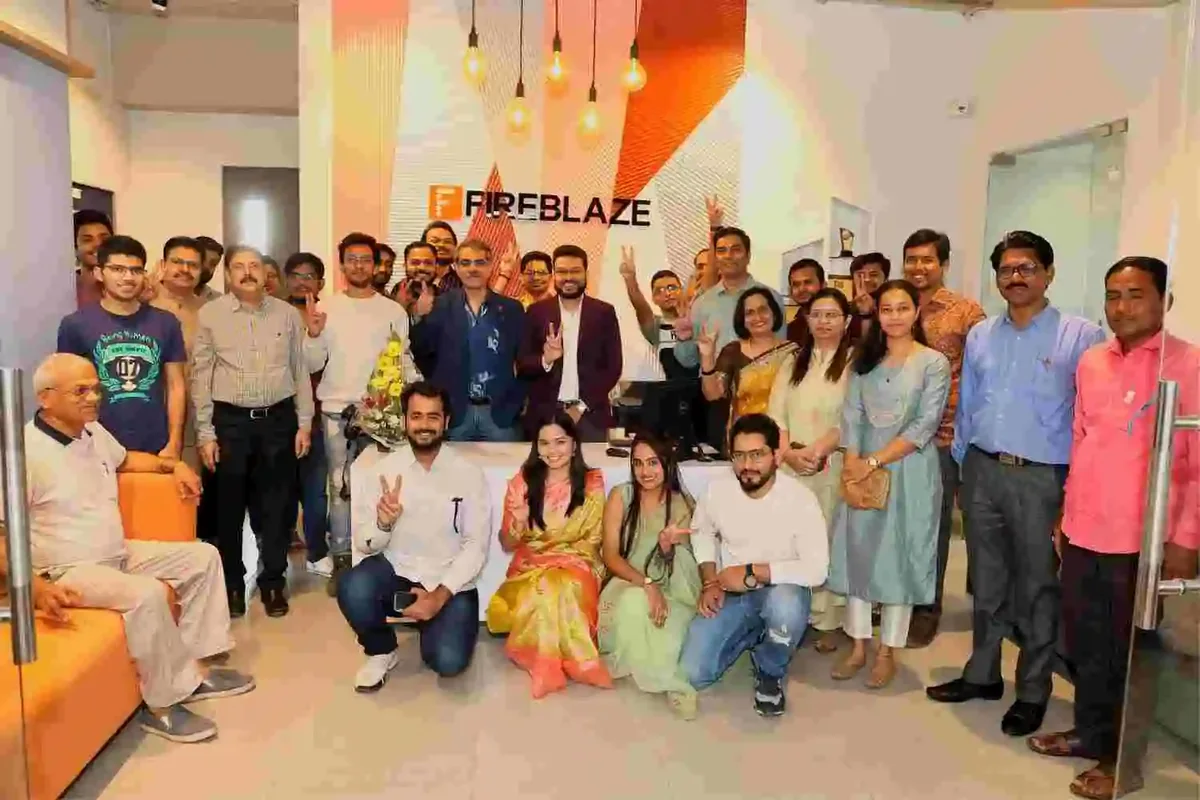
See all three Nagpur centres → Ask an advisor which centre the next cohort runs at.
Career Outcomes
Roles this program prepares you for
The program is built around forward deployed work. Job titles for that work vary between companies, and entry-level candidates usually arrive through an adjacent title first, then grow into full FDE responsibility with experience.
- Forward Deployed Engineer
- Associate Forward Deployed Engineer
- AI Implementation Engineer
- AI Solutions Engineer, or Solutions Engineer
- AI Delivery Engineer
- Applied AI Engineer, or AI Engineer
- Technical Consultant
We do not promise that every graduate becomes a Forward Deployed Engineer. It is a role that rewards engineering experience, and many people reach it after a few years in one of the titles above. What this program gives you is the skill set and the portfolio evidence that the route requires.
Career support included
- Resume and LinkedIn preparation for engineering roles
- Portfolio development, built from your phase deliverables
- Technical interview preparation and mock interviews
- Group discussions and career guidance
We provide placement assistance and do not advertise placement guarantees. Ask for the latest placement report during counselling. See our placement process.
Program Fee
₹95,000Live Online
Inclusive of 18% GST. Available across India.
EMI from ₹10,499 per month for 9 months.
₹1,25,000Nagpur Classroom
Inclusive of 18% GST. In person at our Nagpur centre.
EMI from ₹13,499 per month for 9 months.
- All six phases, including the team capstone
- Study material, project reviews and career services included
- EMI available via Bajaj Finance, Eduvanz or Akshar
- Scholarship eligibility assessed free during counselling: check here
Enrolments are final once payment is made and the batch is confirmed. Please read the refund policy before paying, especially if you are using EMI.
Next Batch
16th November 2026. Seats per classroom batch are limited by room size, so ask an advisor about current availability.
Talk to an AdvisorWhy learn this at Fireblaze AI School
Fireblaze AI School was founded in Nagpur on 31 October 2017 and teaches Data Science, AI and Full Stack Development across three offline centres, alongside live online batches. It is a NASSCOM partner for its Post Graduate Program in Data Science & Analytics.

Taught by practitioners
Mentors are industry professionals with 10+ years of experience, working with the tools they teach. Meet the faculty.
Project-first by default
Every phase ends in a build that is reviewed, not a quiz. The same pedagogy behind our other programs.
Honest about outcomes
We publish alumni outcomes by name on our reviews page and do not advertise job guarantees.
New to this field and not sure this is the right starting point? Compare it with our Post Graduate Program in Data Science & Analytics, our AI-Powered Data Science certification or our Artificial Intelligence course. If you need the underlying building blocks first, the Python, SQL and Machine Learning tracks are available on their own.
FAQ
Frequently Asked Questions
What is a Forward Deployed Engineer?
A Forward Deployed Engineer (FDE) is a technical professional who works closely with customers or business teams to understand a real operational problem, then designs, builds, deploys and adapts a software or AI system to solve it inside that customer's environment. The role combines engineering, AI implementation, integration, deployment and direct customer communication.
What does a Forward Deployed Engineer do day to day?
They run a repeating loop: understand the problem with stakeholders, inspect the existing systems and data, design an architecture that fits the constraints, build the solution, deploy it into the real environment, then measure, debug and hand it over. Exact responsibilities vary between companies.
Is this an AI engineering course?
Yes, with a deployment focus. Phase 2 is eight weeks of AI application engineering covering LLM fundamentals, RAG, agents, tool use and evaluation. What makes it different from a general AI course is that Phases 3 to 5 then take that work into production, security and customer handover.
How long is the Forward Deployed Engineer course?
26 weeks, delivered on weekends and structured in six phases, ending with a four-week team capstone that runs a full deployment engagement from discovery to handover.
What is the course fee?
The live online cohort is ₹95,000 and the Nagpur classroom cohort is ₹1,25,000, both inclusive of 18% GST. EMI starts from ₹10,499 per month for 9 months on the online program and ₹13,499 per month for 9 months on the classroom program. Both fees include all six phases, the capstone, study material, project reviews and career services.
Is the course available online?
Yes. The program runs as live, instructor-led weekend classes you can join from anywhere in India. These are real classes on a fixed schedule with live doubt-solving and the same weekly stakeholder presentation, not recordings. Online students do the same projects and capstone as the classroom cohort.
Is the Forward Deployed Engineer course available in Nagpur?
Yes. Classroom weekends run at Fireblaze AI School in Nagpur, where we have taught data and AI since 2017 across three centres: Mate Square, Nandanvan and Sadar. Ask an advisor which centre the next cohort runs at, since it varies by batch.
Do I need programming experience to join?
Yes. Working knowledge of at least one programming language is the minimum requirement. Python, basic SQL and some Git familiarity are preferred. This is not a beginner course, and if you are starting from zero we will tell you to do our Python course first.
Do I need machine learning experience?
No. Prior machine learning or Generative AI experience is not required. Phase 2 builds LLM and AI application skills from fundamentals. What you do need is the ability to write and debug code, because the program moves quickly from week one.
Is this course suitable for working professionals?
Yes, they are the primary audience. It is built for professionals with 1 to 8 years of experience in IT. The entire program runs on weekends across 26 weeks, and the live online option means you can attend from any city in India without relocating or commuting.
Can freshers join the program?
Technical graduates and final-year CS, IT or AI-DS students who already code can join. Be realistic about the destination though: Forward Deployed Engineer is usually not a first job title. Freshers typically enter through an adjacent role such as software engineer or AI implementation engineer and grow into full FDE responsibility.
What projects will I build?
A tested Python ingestion CLI, a scheduled pipeline across three heterogeneous sources, a RAG application with a real evaluation suite, an AI agent with tool use and tracing, a full production deployment with CI/CD and monitoring, and a four-week team capstone presented to an industry panel.
What tools and technologies are covered?
Python, FastAPI, PostgreSQL with pgvector, Qdrant, Docker, GitHub and GitHub Actions, Terraform, Airflow or Prefect, LangGraph, Langfuse and LangSmith, the Claude and OpenAI APIs, MCP, and cloud fundamentals on AWS or GCP. Each is taught in the context of a deployment problem rather than in isolation.
What is the difference between an FDE and an AI Engineer?
An AI Engineer usually builds AI features and applications for their own company's product. An FDE takes that technology into one customer's environment and makes it work there, which adds integration, deployment on someone else's infrastructure, and constant customer contact to the job.
What is the difference between an FDE and a Solutions Engineer?
Solutions engineers are typically pre-sales and rarely write code on customer infrastructure. Forward Deployed Engineers write and own production code inside the customer's environment, and stay involved after the deal closes. A role labelled FDE that does not involve owning production code is closer to pre-sales.
Is placement guaranteed?
No. We provide placement assistance and do not advertise placement guarantees. What is included is resume and LinkedIn preparation, portfolio development from your phase deliverables, technical interview preparation, mock interviews and career guidance. Ask for the latest placement report during counselling.
How is this different from a Data Science course?
A data science course centres on analysis, statistics and modelling. This program centres on shipping: integration, AI application engineering, deployment, security and customer delivery. If your goal is insight and models, look at our data science programs. If your goal is systems that run in production, this is the closer fit.
How is this different from the Fireblaze PGP in Data Science and Analytics?
The PGP is a broader 6-month foundation covering Excel, SQL, Power BI, Python, statistics, machine learning and Generative AI, and it assumes no coding background. This program assumes you already code, skips the analytics tooling, and goes deep on AI application engineering, deployment and customer-facing delivery instead.
Is there a certificate?
Yes. On successful completion, including the capstone and the attendance requirement, you receive a Fireblaze AI School certificate issued by Fireblaze Technologies Private Limited. The more useful output, and the one interviewers respond to, is the deployed portfolio you build across the six phases.
What happens after I complete the program?
You leave with a portfolio of deployed systems, an evaluated AI application, a capstone you have defended to an industry panel, and the interview preparation to talk about all of it. Career support continues through resume work, mock interviews and hiring-partner introductions.
Next Step
Talk to an Advisor
Tell us where you are now and what you want to build. An advisor will walk you through the curriculum, the weekend schedule, the next batch date and whether this program is actually the right fit for your background.
- Free counselling and honest profile evaluation
- We will tell you if you should do Python or SQL first instead
- Transparent fee, EMI and scholarship discussion, no pressure tactics
- Online and Nagpur classroom options explained
Prefer to ask quickly? Chat with Fireblaze on WhatsApp.