 Fireblaze
 Learning Guides
Targeted Advertising Using Machine Learning: A Complete Guide
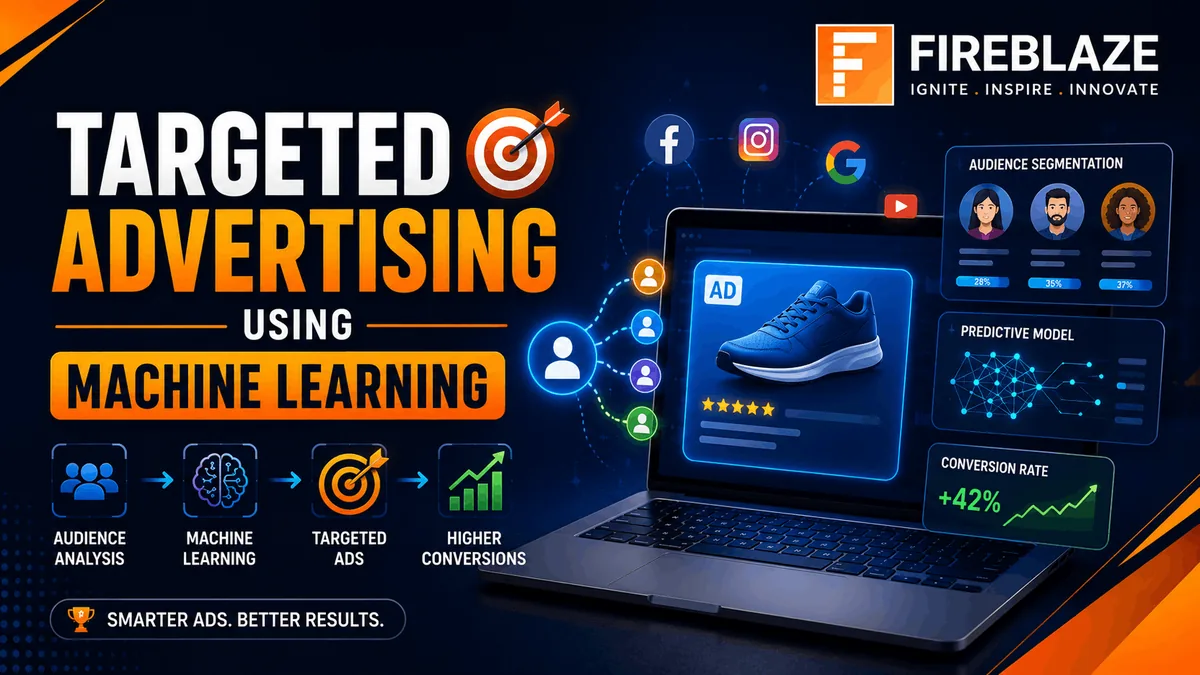
Digital advertising has evolved significantly over the last decade. Traditional advertising methods relied on broad audience targeting, often resulting in lower engagement and wasted marketing budgets.
Today, Machine Learning enables businesses to deliver highly personalized advertisements to the right audience at the right time. This approach is known as Targeted Advertising.
From social media platforms and e-commerce websites to streaming services and search engines, targeted advertising has become one of the most powerful applications of Artificial Intelligence and Machine Learning.
In this guide, you'll learn:
What targeted advertising is
How machine learning powers personalized ads
Key algorithms used in advertising
Benefits and challenges
Real-world applications
Career opportunities in advertising analytics
What is Targeted Advertising?
Targeted Advertising is a marketing strategy that delivers advertisements to specific users based on their:
Demographics
Interests
Online Behavior
Purchase History
Search Activity
Geographic Location
Instead of showing the same advertisement to everyone, businesses use data-driven insights to display relevant ads to individuals who are most likely to engage.
Example:
If a user frequently searches for laptops, they may see advertisements for laptops, accessories, and technology products across various platforms.
Why Machine Learning is Important in Advertising
Modern digital platforms generate massive amounts of user data every second.
Machine Learning helps advertisers:
Analyze user behavior
Predict customer interests
Personalize advertisements
Improve click-through rates
Increase conversions
Reduce advertising costs
Without machine learning, analyzing millions of user interactions manually would be impossible.
How Machine Learning Powers Targeted Advertising
Machine Learning systems continuously learn from user interactions and improve advertising decisions.
The process generally follows these steps:
Step 1: Data Collection
Data is gathered from:
Website Visits
Search Queries
Mobile Applications
Social Media Platforms
Purchase History
Customer Profiles
Step 2: Data Processing
Collected data is cleaned and transformed into useful features.
Examples:
Age
Gender
Location
Device Type
Browsing Behavior
Step 3: User Profiling
Machine Learning models build user profiles based on historical behavior.
Example:
A user interested in fitness may frequently visit:
Gym websites
Health blogs
Sports stores
The system identifies these interests automatically.
Step 4: Ad Prediction
Models predict:
Which ad a user is most likely to click
Which product a user may purchase
Which campaign is most relevant
Step 5: Real-Time Ad Delivery
Advertisements are displayed instantly based on model predictions.
The system continuously learns from user interactions and updates recommendations.
Machine Learning Algorithms Used in Targeted Advertising
Several machine learning algorithms are commonly used.
1. Logistic Regression
Used for:
Click Prediction
Conversion Prediction
User Response Modeling
Example:
Predicting whether a user will click on an advertisement.
2. Decision Trees
Decision Trees help segment users based on multiple characteristics.
Applications:
Customer Segmentation
Audience Targeting
Behavioral Analysis
3. Random Forest
Random Forest combines multiple decision trees to improve prediction accuracy.
Used for:
Ad Click Prediction
Customer Classification
Conversion Forecasting
4. Gradient Boosting Models
Popular algorithms include:
XGBoost
LightGBM
CatBoost
These models are widely used in advertising systems due to their high predictive performance.
5. Neural Networks
Deep Learning models can identify complex user behavior patterns.
Applications include:
Personalized Recommendations
Dynamic Ad Targeting
Customer Intent Prediction
Recommendation Systems in Advertising
Recommendation systems are a major component of targeted advertising.
They suggest products and advertisements based on user preferences.
Examples:
Amazon Product Recommendations
Netflix Content Suggestions
YouTube Video Recommendations
Machine Learning helps predict which products users are most likely to engage with.
Types of Recommendation Systems
Content-Based Filtering
Recommendations are based on item characteristics.
Example:
Users who view programming books receive recommendations for similar books.
Collaborative Filtering
Recommendations are based on behavior from similar users.
Example:
Users with similar shopping habits receive similar product recommendations.
Hybrid Recommendation Systems
Combines multiple recommendation approaches for improved accuracy.
Most modern advertising platforms use hybrid systems.
Customer Segmentation Using Machine Learning
Customer Segmentation divides users into groups based on shared characteristics.
Common segmentation factors include:
Age
Income
Interests
Purchasing Behavior
Geographic Location
Benefits:
More relevant advertisements
Improved campaign performance
Better customer engagement
Predictive Analytics in Advertising
Predictive Analytics uses historical data to forecast future outcomes.
Advertising applications include:
Click Through Rate (CTR) Prediction
Predicting whether users will click advertisements.
Formula:
CTR = Clicks / Impressions × 100
Conversion Prediction
Predicting whether users will complete a purchase or desired action.
Customer Lifetime Value (CLV)
Estimating long-term customer revenue potential.
Churn Prediction
Identifying users likely to stop engaging with a product or service.
Real-Time Bidding (RTB)
Real-Time Bidding is an automated advertising process where ad impressions are bought and sold instantly.
Machine Learning helps determine:
Bid Amount
Audience Relevance
Conversion Probability
Advertising Value
The entire process occurs within milliseconds.
Benefits of Targeted Advertising
Higher Conversion Rates
Relevant ads increase the likelihood of purchases and engagement.
Improved Customer Experience
Users receive advertisements aligned with their interests.
Better Marketing ROI
Advertising budgets are spent more efficiently.
Personalized Marketing
Each customer receives unique advertising experiences.
Data-Driven Decision Making
Businesses make informed marketing decisions using analytics.
Challenges in Targeted Advertising
Privacy Concerns
User privacy regulations require responsible data collection practices.
Data Quality Issues
Poor-quality data can reduce model performance.
Bias in Algorithms
Biased training data may produce unfair advertising outcomes.
Model Maintenance
Advertising models require regular updates and monitoring.
Real-World Applications
E-Commerce
Personalized product advertisements based on browsing and purchase history.
Social Media Platforms
Platforms display relevant sponsored content based on user interests.
Search Engines
Search advertisements are tailored to user queries.
Streaming Platforms
Content recommendations and promotional advertisements are personalized.
Mobile Applications
Apps deliver targeted notifications and advertisements based on user behavior.
Career Opportunities in Advertising Analytics
The growing adoption of AI-driven marketing has created demand for professionals skilled in:
Data Analytics
Machine Learning
Marketing Analytics
Customer Analytics
Business Intelligence
Popular job roles include:
Data Analyst
Analyzes campaign performance and customer behavior.
Marketing Analyst
Optimizes marketing strategies using data.
Machine Learning Engineer
Builds recommendation and prediction systems.
Data Scientist
Develops advanced predictive models and advertising algorithms.
Interview Questions on Targeted Advertising
What is Targeted Advertising?
Targeted Advertising delivers personalized advertisements to users based on data-driven insights and behavior patterns.
How Does Machine Learning Improve Advertising?
Machine Learning predicts user interests, improves personalization, and increases campaign effectiveness.
What is CTR?
CTR (Click Through Rate) measures the percentage of users who click on an advertisement.
What is Customer Segmentation?
Customer Segmentation groups users based on shared characteristics for more effective marketing.
Which Algorithms are Commonly Used?
Popular algorithms include:
Logistic Regression
Random Forest
XGBoost
Neural Networks
Recommendation Systems
Why Learn Advertising Analytics in 2026?
Digital advertising continues to be one of the fastest-growing applications of Artificial Intelligence and Machine Learning.
Companies increasingly rely on:
Personalized Marketing
Recommendation Systems
Predictive Analytics
Customer Intelligence
Professionals who understand advertising analytics and machine learning are highly sought after across technology, e-commerce, fintech, and digital marketing industries.
Final Thoughts
Targeted Advertising is one of the most impactful applications of Machine Learning in today's digital economy. By analyzing customer behavior, predicting preferences, and delivering personalized experiences, machine learning enables businesses to improve engagement, increase conversions, and maximize marketing effectiveness.
As AI-powered marketing continues to evolve, understanding targeted advertising will remain a valuable skill for Data Scientists, Machine Learning Engineers, Marketing Analysts, and AI professionals.
Keep Reading
Related Articles
Learning Guides
Introduction to Computer Vision: A Beginner’s Guide
Discover the basics of Computer Vision, a rapidly growing field of Artificial Intelligence that enables machines to understand images and videos. Expl
All About PyCaret: Conversation with Mr. Moez Ali and Mr. Aniruddha Kalbande | EP-06
Explore PyCaret and its impact on machine learning development through an insightful conversation with PyCaret creator Moez Ali and AI expert Aniruddh
What is Data Mining? Complete Guide for Beginners
Learn what Data Mining is, how it works, key techniques, tools, applications, advantages, challenges, and its role in Data Science, Machine Learning,