 Fireblaze
 Fireblaze News & Events
AI for Productivity at Basant Agro Tech, Nagpur: A Case Study
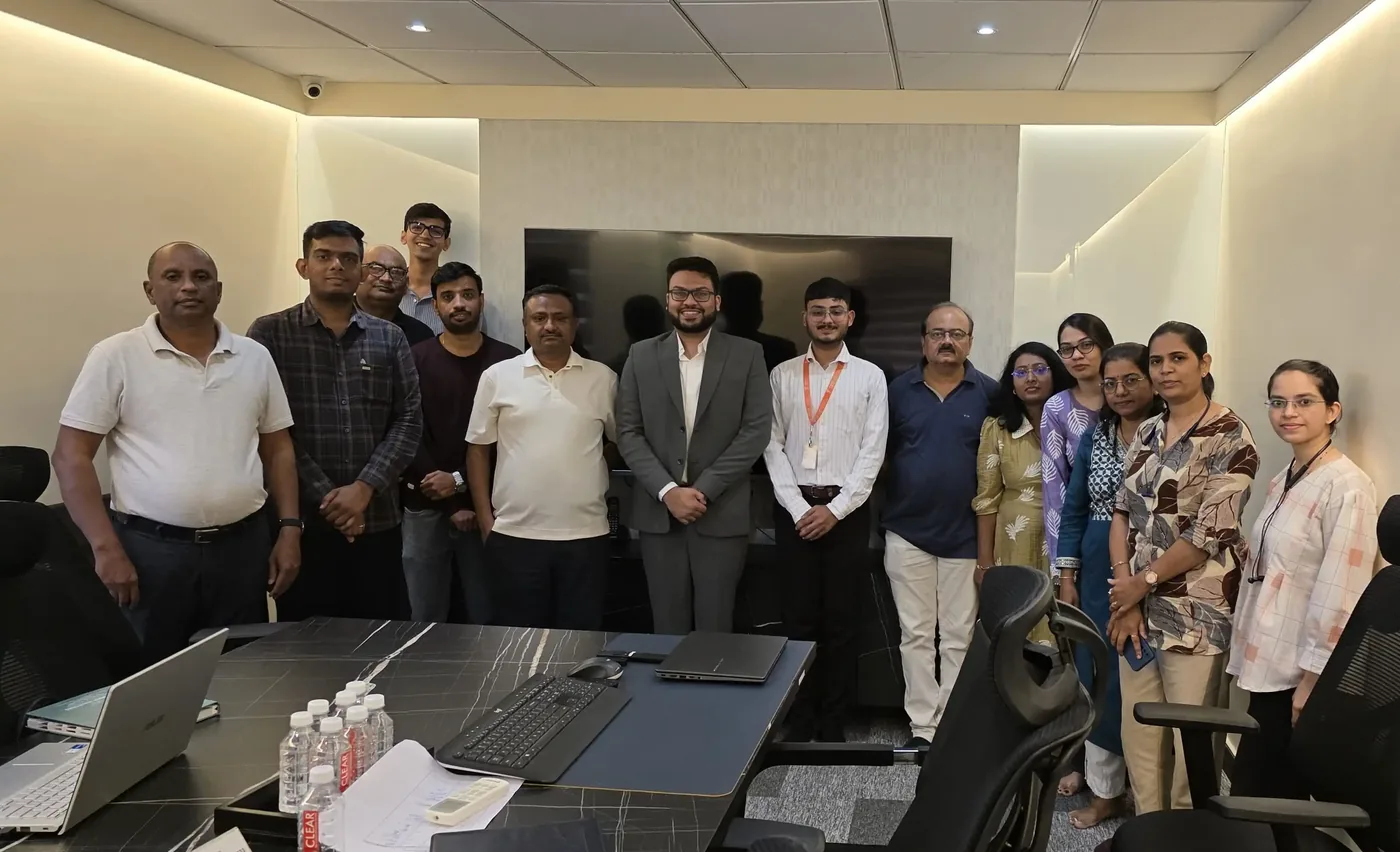
Quick answer: Fireblaze AI School delivered a hands-on, two-day AI for Productivity program on 11 and 12 September 2026 at the Nagpur office of Basant Agro Tech (I) Ltd, the agri-input manufacturer behind the Krishi Sanjivani brand. Around 50 employees from Marketing, Sales, HR, Admin, Purchase and Production attended. Instead of one generic AI talk, we built a separate set of use cases for each department and had every attendee test prompts on their own work using ChatGPT, Claude and Gemini. This post covers what each department built, and the wider library of agribusiness and agri-export use cases we drew on.
The brief: six departments, not one generic AI talk
Basant Agro Tech is part of the 130-year-old Bhartia Group of Akola and manufactures NPK mixed fertilizers, single super phosphate, secondary nutrients and seed under the Krishi Sanjivani brand, alongside B-Organic products and Rainmaker irrigation pipe. The engagement ran over two days, 11 and 12 September 2026, under the leadership of Shashikant C. Bhartia, Chairman & Managing Director.
The request was specific: make AI useful to people who are not going to become AI specialists. That framing ruled out the format most corporate AI sessions default to, where everyone sits through the same demo of a chatbot writing a poem and leaves impressed but unchanged. A purchase executive comparing vendor quotes and a marketing executive writing dealer copy have almost nothing in common in their daily work, so they should not be given the same examples.
So we designed six separate use-case sets, one per department, and ran the session hands-on. Every attendee worked on their own recurring tasks during the session rather than watching someone else type.
What each department actually worked on
These are the use cases each function built and tested during the session, not a menu of possibilities.
Marketing
- Season-linked campaign copy tied to the sowing calendar, for Kharif and Rabi product pushes
- Turning a technical product sheet into farmer-facing WhatsApp and poster copy
- Producing the same approved message in Marathi, Hindi and English without rewriting it three times
- Summarising competitor brand messaging in the agri-input category
- Generating claim variants for regulatory and packaging review
Sales
- Dealer and distributor call preparation briefs, territory by territory
- Objection-handling scripts for price, credit period and competing brands
- Converting messy field visit notes into structured CRM entries
- Follow-up messages written in the dealer's own language
- Turning a monthly sales sheet into three talking points for a review meeting
HR
- Job descriptions for agronomists, field officers and plant operators
- Screening question banks matched to each role
- Drafting and summarising policy documents and SOPs
- Induction and training material for new field staff
- Structuring appraisal feedback so it is specific rather than boilerplate
Admin
- Meeting minutes and action points from rough notes
- Vendor and facility correspondence drafting
- Reusable templates for recurring internal documents
- Triaging a full inbox down to what genuinely needs a reply today
- Travel and logistics coordination drafts
Purchase
- Turning vendor quotes that arrive in six different formats into one comparison table
- Drafting RFQs and preparing for supplier negotiations
- Summarising commodity price movement into a short buying note
- Checklists for import documentation and incoming consignments
- Reading a long supply contract and listing the clauses worth querying
Production
- Drafting SOPs and shift handover summaries
- Structuring root cause analysis for a batch deviation
- Preventive maintenance and safety briefing checklists
- Writing up quality deviation reports consistently
- Turning a plant log into a readable weekly summary
The tools we compared, and why we did not pick one
We covered ChatGPT, Claude and Gemini, and ran the same real tasks across them so attendees could see for themselves where each one was noticeably better or worse. This was deliberate. Teams that learn one tool tend to learn that tool's interface rather than the underlying skill, and then struggle when the organisation switches or the tool changes its behaviour after an update.
What we actually taught underneath the tool comparison:
- Prompt engineering fundamentals: giving the model a role, the context, the constraints, an example and a required output format, then iterating instead of accepting the first answer
- Working from your own documents: summarising, extracting and rewriting source material you supply, rather than asking a model to recall facts from memory, which is where most bad output originates
- Verification discipline: how to recognise a confident wrong answer
- Data sensitivity: what should not be pasted into a public assistant, and why that matters for commercial terms and unreleased product information
Why verification was its own module, not a closing footnote
Most corporate AI training treats accuracy as a disclaimer at the end. In an agri-input business that is the wrong weighting. A confidently wrong nutrient dosage, a misquoted regulatory limit or an invented product specification does not stay inside the office. It reaches a dealer, a farmer or a consignment, and by then it carries the company's name on it.
So we spent real time on the failure modes rather than only the wins: where these tools fabricate specifics, why they do it most confidently when asked to recall rather than to summarise, and which categories of task should never be delegated without a human sign-off. The rule we left every department with is simple. AI drafts the explanation. A qualified person still makes the recommendation.
AI use cases for agribusiness and agri-export teams
The department sets above were cut down from a wider library we maintain for agri-input, seed, agrochemical, food processing and agri-trading companies. It is published here in full, because most of it applies to any agribusiness, not only to this one engagement.
Agronomy and farmer advisory
- Turning a soil test report into advice a farmer can act on, in plain regional language
- Explaining an NPK recommendation, and what happens if the dose is skipped or doubled
- Drafting crop-stage advisory calendars for Kharif, Rabi and summer cycles
- Building a pest and disease symptom FAQ bank for field officers to carry
- Comparing seed varieties on duration, yield potential and suitability into one readable sheet
- Converting a weather forecast into a spray, irrigation or harvest advisory
- Explaining a government scheme or subsidy without the legal jargon
- Preparing dealer training content on correct product application and dosage
- Writing package-of-practice summaries per crop and per region
- Drafting answers to the twenty questions a helpline actually receives every week
Agronomic output always goes to a qualified agronomist before it reaches a farmer.
International trade, import and export
- Researching HS code classification for fertilizers, seeds, agrochemicals and plastics, then verifying against the official tariff
- Explaining Incoterms, and what FOB, CIF and DAP each change about cost and risk
- Building a Letter of Credit document checklist and catching mismatches before the bank does
- Drafting proforma invoices, packing lists and certificate of origin requests
- Summarising destination-country phytosanitary and registration requirements into a go or no-go list
- Structuring a landed cost calculation across foreign exchange, freight, duty and insurance
- Comparing freight and forwarder quotes on a like-for-like basis
- Preparing for a negotiation with an overseas supplier or buyer, including the likely counter-positions
- Drafting international buyer and supplier correspondence in clear business English
- Summarising a long international contract down to the clauses that carry risk
- Building a supplier due-diligence and document-request checklist for a new overseas vendor
- Turning an export shipment tracker into a weekly management summary
Classification, duty and compliance answers are treated as research leads to confirm against official sources. They are never treated as filings.
Supply chain, procurement and warehousing
- Normalising vendor quotes that arrive in six different formats into one comparison table
- Summarising raw material price trends into a short buying recommendation
- Drafting RFQs, purchase terms and vendor onboarding documents
- Building inbound quality-check and goods-receipt checklists
- Writing warehouse SOPs for storage, stacking and dispatch
- Turning a stock ageing report into an action list
- Preparing supplier performance review notes from delivery and quality history
Sales, distribution and the dealer network
- Territory-wise call plans and pre-visit briefs
- Dealer scheme explanations written once and localised per state
- Objection handling for credit terms, pricing and competing brands
- Converting field notes and voice memos into structured CRM entries
- Summarising secondary sales data into a review-meeting narrative
- Drafting collection and payment follow-ups that stay professional
- Building a new-dealer onboarding pack
Marketing and regional-language content
- Product launch campaigns tied to the sowing calendar rather than the financial calendar
- One message adapted into Marathi, Hindi and English while keeping the technical claim identical
- Farmer testimonial and field-day write-ups from raw notes
- A technical datasheet rewritten as a WhatsApp forward, a poster and a radio script
- Social and video scripts for demo plots and field trials
- Competitive messaging analysis across the agri-input category
- Generating claim variants for compliance and packaging review
Plant operations, quality and safety
- SOP drafting and revision control
- Shift handover and plant log summarisation
- Structured root cause analysis for batch and quality deviations
- Preventive maintenance schedules and checklists
- Safety toolbox talks and incident write-ups
- Turning audit observations into a tracked corrective action list
HR, admin and internal communication
- Role-specific job descriptions and screening question banks
- Policy and SOP drafting, plus plain-language summaries for staff
- Induction material and role-based training paths
- Appraisal feedback that is specific rather than boilerplate
- Meeting minutes, action tracking and follow-up drafts
- Internal announcements and circulars in multiple languages
What we would tell another agri-input company
Three things carried the session, and they are the three we would repeat anywhere.
Split by department before you start. The single biggest driver of whether people use these tools on Monday is whether they saw their own task solved on Friday. Generic examples produce polite interest and no behaviour change.
Make people type. A demo teaches the audience that the tool is impressive. Hands-on practice teaches them that the first output is usually mediocre and the third is useful, which is the actual skill.
Teach the failure modes early. Teams that only see the wins either over-trust the tool and ship an error, or lose confidence the first time it invents something and abandon it. Showing the failures during training is what makes adoption survive contact with real work.
If you are considering something similar for your own team, our corporate training programs are scoped per engagement after a free discovery call, and we map the use cases to your departments and your documents rather than handing over a standard deck.
FAQ
Frequently Asked Questions
Which company was the AI training delivered for?
Basant Agro Tech (I) Ltd, the agri-input manufacturer behind the Krishi Sanjivani brand, at their Nagpur office on 11 and 12 September 2026. Around 50 employees from Marketing, Sales, HR, Admin, Purchase and Production attended, and the engagement was conducted under the leadership of Shashikant C. Bhartia, Chairman & Managing Director.
Which AI tools were covered in the training?
ChatGPT, Claude and Gemini, compared side by side on the same real tasks. The session was deliberately tool-agnostic, because prompt engineering skill transfers between assistants while familiarity with one interface does not.
Why was the training split by department?
Because a purchase executive comparing vendor quotes and a marketing executive writing dealer copy share almost nothing in their daily work. People adopt these tools when they see their own task solved, so we built six separate use-case sets rather than showing everyone the same demo.
What AI use cases apply to a fertilizer or seed company?
The highest-value ones cluster around farmer advisory, dealer and distribution communication, regional-language marketing, raw material procurement, plant SOPs and quality documentation. This post publishes the full library of 55 use cases across seven functional groups.
How can AI help with import and export work?
Typical uses include HS code classification research, explaining Incoterms, building Letter of Credit document checklists, drafting proforma invoices and packing lists, summarising destination-country phytosanitary requirements, structuring landed cost calculations and preparing for supplier negotiations. Classification and compliance output should always be verified against official sources rather than treated as a filing.
Can AI tools write in Marathi and Hindi for farmer communication?
Yes, and it is one of the highest-value use cases for agri-input marketing and sales teams. The important discipline is keeping the technical claim identical across languages, which matters when the claim is regulated.
How was AI accuracy and hallucination risk handled?
Verification was taught as its own module rather than a closing disclaimer. In an agri-input business a wrong dosage, specification or regulatory limit can reach a dealer, a farmer or a consignment, so every department was taught to treat AI output as a fast first draft that a qualified person still signs off.
Does Fireblaze AI School deliver corporate AI training for other companies?
Yes. We deliver hands-on corporate training across Nagpur and Maharashtra, on-site or live online, in Generative AI productivity, prompt engineering, data analytics, Power BI, Python and machine learning. Programs are scoped per engagement after a free discovery call.
Keep Reading
Related Articles
AI & Careers
Generative AI Skills Every Data Analyst Needs in 2026
The Generative AI skills that matter for data analysts: prompt engineering for analysis, verifying AI output, workflow automation and where not to use AI.
AI & Careers
Prompt Engineer Is India's Fastest-Growing Job Title, and Nobody Can Price It Yet
LinkedIn ranks Prompt Engineer as India's fastest-growing job title for 2026. No survey-grade salary data exists for it, and here is why that is honest, not a gap in our research.
Fireblaze News & Events
Fireblaze AI School Founder Mentors Winning Teams at Orange Promptathon 2026
Fireblaze AI School founder Aniruddha Kalbande mentored multiple student teams that secured top positions at Orange Promptathon 2026, a major AI…