Data Science vs Data Analytics: Which Career is Better in 2026?
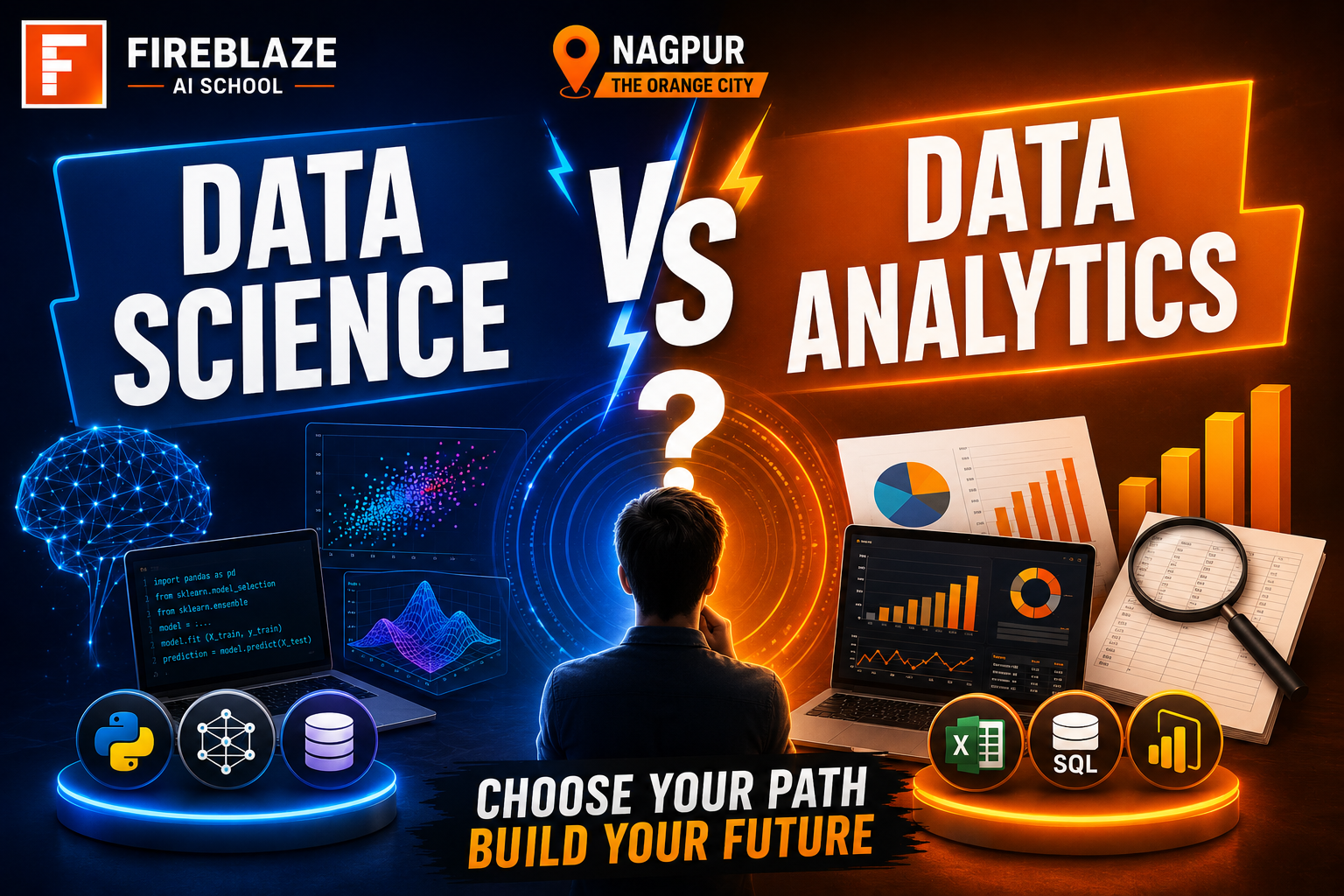
Data Science vs Data Analytics: Which Career is Better in 2026?
As businesses become increasingly data-driven, careers in Data Science and Data Analytics continue to grow rapidly. Both fields offer excellent salaries, exciting job opportunities, and long-term career growth.
However, many students struggle to understand the difference between these two career paths.
Questions like:
- Should I learn Data Science or Data Analytics?
- Which field has better salaries?
- Which one is easier to learn?
- Which career has more job opportunities?
are extremely common.
In this guide, we'll compare Data Science and Data Analytics in detail so you can choose the best path for your future.
What is Data Analytics?
Data Analytics focuses on analyzing existing data to identify patterns, trends, and business insights.
Data Analysts help organizations answer questions such as:
- Why did sales increase?
- Which products perform best?
- What factors affect customer retention?
- How can business performance improve?
Common Tools Used in Data Analytics
- Excel
- SQL
- Power BI
- Tableau
- Python (Basic)
Typical Job Roles
- Data Analyst
- Business Analyst
- Reporting Analyst
- Power BI Developer
- Business Intelligence Analyst
What is Data Science?
Data Science focuses on predicting future outcomes using advanced statistical methods, machine learning, and artificial intelligence.
Data Scientists answer questions like:
- What will sales be next month?
- Which customers are likely to leave?
- How can AI automate decision-making?
- What patterns can machine learning identify?
Common Tools Used in Data Science
- Python
- Machine Learning
- Statistics
- Deep Learning
- SQL
- Data Visualization Tools
Typical Job Roles
- Data Scientist
- Machine Learning Engineer
- AI Engineer
- Research Scientist
- Analytics Consultant
Data Science vs Data Analytics: Key Differences
Purpose
Data Analytics
Focuses on understanding past and present data.
Data Science
Focuses on predicting future outcomes and building intelligent systems.
Complexity
Data Analytics
Beginner-friendly and easier to learn.
Data Science
Requires deeper technical and mathematical knowledge.
Coding Requirements
Data Analytics
Minimal coding required initially.
Data Science
Strong Python programming skills are essential.
Mathematics
Data Analytics
Basic statistics is usually sufficient.
Data Science
Requires advanced statistics and machine learning concepts.
Which Career Has More Job Opportunities?
Currently, Data Analytics offers more entry-level opportunities.
Many organizations hire:
- Data Analysts
- Business Analysts
- Reporting Specialists
because every business needs reporting and analytics support.
Data Science roles are fewer in number but often more specialized.
For beginners, Data Analytics is generally the faster route into the industry.
Salary Comparison
Data Analyst Salary
Freshers
₹3 LPA – ₹6 LPA
Experienced Professionals
₹8 LPA – ₹15+ LPA
Data Scientist Salary
Freshers
₹6 LPA – ₹12 LPA
Experienced Professionals
₹15 LPA – ₹35+ LPA
While Data Scientists often earn higher salaries, the learning curve is also significantly steeper.
Which Career is Easier to Learn?
For most students, Data Analytics is easier because it focuses on:
- Excel
- SQL
- Power BI
- Data Visualization
- Business Reporting
Data Science requires:
- Programming
- Machine Learning
- Advanced Mathematics
- Statistical Modeling
If you're just starting, Data Analytics is often the recommended first step.
Can a Data Analyst Become a Data Scientist?
Absolutely.
Many professionals follow this career path:
Data Analyst → Senior Data Analyst → Business Analyst → Data Scientist
This progression allows you to build strong analytical foundations before moving into advanced AI and Machine Learning concepts.
Who Should Choose Data Analytics?
Data Analytics is ideal for:
- Beginners
- Freshers
- Commerce Students
- BBA Students
- MBA Students
- Working Professionals
- Career Switchers
It provides faster entry into the job market and strong growth opportunities.
Who Should Choose Data Science?
Data Science is ideal for:
- Engineering Students
- Mathematics Enthusiasts
- Programmers
- AI Enthusiasts
- Individuals interested in Machine Learning
It offers exciting opportunities for those who enjoy solving complex technical problems.
Future Scope of Data Analytics
Data Analytics continues to grow because businesses increasingly depend on data-driven decision-making.
Industries actively hiring Data Analysts include:
- IT
- Healthcare
- Finance
- Retail
- E-Commerce
- Manufacturing
The demand for skilled analysts is expected to remain strong throughout the decade.
Future Scope of Data Science
Artificial Intelligence and Machine Learning are transforming industries worldwide.
As AI adoption increases, demand for Data Scientists and AI professionals will continue to rise significantly.
This makes Data Science one of the most future-focused careers available today.
Which Career Should You Choose in 2026?
Choose Data Analytics if:
- You want faster job opportunities.
- You are new to technology.
- You prefer business-focused work.
- You want a smoother learning curve.
Choose Data Science if:
- You enjoy programming.
- You love mathematics.
- You are interested in AI and Machine Learning.
- You want to build predictive models and intelligent systems.
Learn Industry-Relevant Skills with FireBlaze AI School
Whether you choose Data Analytics or Data Science, practical training is essential.
A strong training program should include:
- Live Projects
- Industry Tools
- Placement Support
- Career Guidance
- Interview Preparation
FireBlaze AI School helps students develop real-world skills through project-based learning and industry-focused training.
Frequently Asked Questions
Is Data Science better than Data Analytics?
Not necessarily. Both fields offer excellent opportunities. The best choice depends on your interests, skills, and career goals.
Which career has higher salaries?
Data Science generally offers higher salary potential, but Data Analytics provides easier entry into the industry.
Can Commerce students learn Data Science?
Yes, although Data Analytics is often a more beginner-friendly starting point.
Is Data Analytics still in demand?
Absolutely. Organizations across industries continue to hire Data Analysts to support business decision-making.
Conclusion
Both Data Science and Data Analytics are excellent career options in 2026. If you're looking for a faster entry into the job market, Data Analytics is often the best starting point. If you're passionate about AI, Machine Learning, and advanced problem-solving, Data Science can offer tremendous long-term opportunities.
The key is to start learning practical skills, work on real-world projects, and gain hands-on experience that employers value.